On July 10, 2026, the Health System Sustainably Group (HSSG) delivered a comprehensive set of recommendations to Governor Kotek on how to address the deepening crisis posed by the intersection of rising healthcare cost and a massive loss of federal funds. The HSSG—a group of leaders from hospitals, physician organizations, and insurers—has been meeting since April of 2025, and was tasked by the governor to bring recommendations for consideration by the 2026 and 2027 legislatures.
While the HSSG report is the centerpiece of these recommendations, it also includes two companion sets of recommendations that are foundational to reaching our long-term goal of a more affordable, sustainable and financially stable healthcare system in Oregon. The first makes recommendations to reinvest in and reinvigorate our Primary Care system. The second focuses on recommendations to reimagine and reform our fragmented and ineffective Adult Mental Health system.
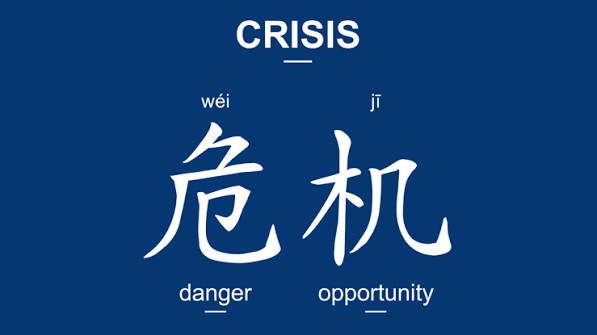
The crisis that these recommendations are intended to address poses an existential threat for Oregon: a threat to access, a threat to the stability of our general fund and a threat t0 our economy. Embedded in this crisis, however, is a profound opportunity to reimagine and redesign our current healthcare system into one that not only ensures timely access to quality affordable medical care for all Oregonians, but is economically sustainable and financially stable.
This crisis was decades in the making, and cannot be turned around in the course of a single two-year state budget and legislative cycle. For that reason, we need a six-year, 3-biennnia strategy, the foundation for which must be built in the 2027 session. The projected loss of an estimated $8 billion in federal funds over the next two biennia has led Oregon to a crossroads.
One road leads to a reactive strategy that simply cuts funding from the current structure of our healthcare system, but leaves the structure essentially intact. The other road takes us toward a proactive strategy, that seeks to redesign our healthcare system, with the goal of putting it on a more sustainable and affordable trajectory.
Think of our healthcare system as a house, built decades ago, and think of Oregonians as the family who has lived in that house for generations. The way the house was designed made sense when it was built. But over time the family, its needs and the way it lives have changed, but the structure of the house hasn’t. There are too many rooms, they’re not the right size, there’s no insulation, and the roof needs replacing. The cost of maintaining the house is more than the family can afford. And at some point, the house must be redesigned to be affordable, and to meet the family’s evolving needs.
For better or for worse, the intersection between rising system cost and the loss of federal funds has leveled the House of Healthcare to its foundations— giving us the opportunity to rebuild it. These recommendationsare designed to serve as the blueprint for a reconstruction project—one that will take the next three biennia to complete, and will be guided by Oregon’s North Star Policy Vision, adopted by the 2026 legislature.
These recommendations recognize that there is no one, single factor driving the growing crisis in cost, access and economic sustainability. On the contrary, there are multiple contributing factors, all of which must be addressed in a balanced strategy. That means this crisis can only be solved by working together. It cannot be effectively addressed as long as individual stakeholders are operating in their respective silos. It will require engagement and compromise from everyone—payers, providers, labor, business and health care consumers.
Will this easy? No, but we have done hard things before. In 2011, in the depth of the Great Recession, Oregon faced a $3.5 billion revenue shortfall, over a third of which was in Medicaid. Yet we managed through that challenge without tearing our state apart, and without losing our sense of community and commitment to one another. And out of that budget crisis came Oregon’s Coordinated Care Organizations, which expanded coverage and reduced the total cost of care.
We are called upon to do so again— to rise above the divisive partisanship that has come to define the political discourse in our country, and to come together as people who share a common future, and who will all be impacted if we fail to address the current trajectory of our healthcare system.
This is a defining moment for our state. We are at an inflection point, and we need to choose—choose whether we will falter and continue to blame one another, and cling tenaciously to a failing health system business model, or whether we will rise to meet the challenge, and together— in the heat of the crucible—forge the courage and leadership that this moment calls for.
We can do this.
John Kitzhaber is the 4-time elected former governor of Oregon. He is an emergency room physician by training, and was once named the 2nd most important health policy leader in the US by Modern Healthcare.



Health Policy Commons
Browse by state